The Complete Guide to Dune Buggy Rental Dubai for First-Time Desert Riders
If you have never sat behind the wheel of a dune buggy, the idea of launching yourself across red sand dunes in Dubai can feel both thrilling and a little intimidating. I have spent the better part of a decade guiding off-road experiences in the UAE, and I can tell you that the gap between wanting to try and actually doing it is smaller than most people think. The key is finding a reliable dune buggy rental Dubai operator that matches the right machine to your skill level and gives you a safe, open area to learn the basics before you hit the bigger dunes.
The Lahbab desert, about forty minutes southeast of Dubai, is where most self-drive tours operate. The dunes there are tall but forgiving, with long ridges that let you build speed gradually. I have watched first-timers go from white-knuckled grips on the steering wheel to genuine laughter in the span of fifteen minutes. That transition depends on two things: a well-maintained buggy and a guide who knows when to let you learn by feel. Desert Buggy Rental dune buggy rental dubai has built its reputation around that exact balance.
Understanding the Dune Buggy Experience
A dune buggy in Dubai is not the same as a beach buggy you might have driven on a holiday in Greece or Mexico. The vehicles purpose-built for desert work have high ground clearance, wide sand tires, and a low center of gravity. They are designed to slide, climb, and absorb the shock of a drop-off. If you have driven a quad bike before, a buggy will feel more stable. You sit lower, you have a seatbelt and a roll cage, and the steering is direct enough that you feel the sand under the tires without fighting the wheel.
Most rental companies offer buggies with either a manual or automatic transmission. For a first-time rider, I strongly recommend an automatic. Manual shifting on sand requires a feel for when to drop a gear to keep the engine in its power band, and that is a distraction you do not want when you are also learning how to read the dune face. A good operator will ask about your experience level and match the buggy accordingly. They will also brief you on the basic safety signals and the hand gestures the guide uses to tell you to slow down or change direction.
What a Typical Desert Buggy Tour Looks Like
A standard two-hour tour usually breaks down into three parts. The first fifteen to twenty minutes are a familiarization ride on flat or gently rolling sand. The guide leads at a moderate pace, letting you get used to the buggy's throttle response and the way the rear wheels dig in when you turn. After that, the group heads into medium-sized dunes where you can pick up speed and start feeling the buggy's natural slide. The final segment pushes into the taller red dunes, where the angles get steeper and the views open up. You stop at a high point for photos, then ride back across the desert floor.

Some operators, including Desert Buggy Rental dune buggy rental dubai, offer extended morning or sunset tours that last three to four hours. The sunset tours are particularly good for riders who want softer light for photography and slightly cooler temperatures. The trade-off is that the sand can be busier in the late afternoon, with more groups sharing the same dune field. Morning tours give you near-empty dunes but harsher light and a faster warm-up as the day heats up.
Choosing the Right Buggy for Your Needs
Not all buggies are the same. The most common rental buggies in Dubai are two-seaters, either a single-seat with a passenger seat beside the driver or a tandem layout where the passenger sits behind. A two-seater is fine for a couple or a parent with a teenager. If you are a larger rider, check the weight limit. Most standard buggies accommodate up to 200 kilograms combined, but some older models have lower limits. Do not assume. Ask the operator directly.
I have seen riders who are over six feet tall struggle in buggies with short wheelbases. The knee angle becomes uncomfortable after an hour. If you are tall, look for a buggy with an adjustable seat or a longer cab. The newer models from brands like Yamaha and Hisun have better legroom. Desert Buggy Rental uses a fleet of these newer buggies, which is one reason they get consistent positive feedback from taller guests.
Safety Gear and What to Wear
Every reputable company provides a helmet, goggles, and a balaclava or face scarf. The goggles are essential. Even a light breeze lifts fine sand that will get into your eyes at speed. Wear closed-toe shoes, preferably boots or trainers with good grip. Sandals are a bad idea. The buggy's pedals can be hot, and if you need to brace your foot, you want something that stays on.
Long sleeves and trousers are not just for sun protection. The sand is abrasive, and if you catch your arm on the side of the buggy during a sharp turn, bare skin will come off. Lightweight cotton or synthetic shirts that breathe are better than heavy denim. A thin jacket can come off and be tied around the roll cage when the temperature rises.
Common Mistakes First-Time Riders Make
The most frequent error I see is over-steering. On sand, a buggy turns by a combination of steering wheel input and throttle. If you crank the wheel hard at low speed, the front tires dig in and the buggy stops turning. You have to learn to trust the rear end to slide. A gentle wheel input with a steady throttle will swing the back around much more effectively than a frantic spin of the wheel.

The second mistake is braking too hard on a downhill. Sand is loose, and a locked wheel will cause the buggy to skid sideways. Feather the brake instead of stomping it. Tap it in short pulses to maintain control while descending a steep dune face. A good guide will walk you through this before you hit the big drops, but it is easy to forget in the moment.
Third, riders sometimes forget to hydrate. Two hours in the desert, even in winter, leads to fluid loss that you do not feel until you stand up after the ride. Drink water before you set out, and bring a bottle in the buggy if the operator allows it. Most buggies have a small storage compartment or a mesh pouch for a water bottle.
When to Book and What to Expect on the Day
Dubai's desert season runs from October through April. Summer tours exist but start very early, often before sunrise, to beat the heat. If you are visiting between May and September, book a morning slot that ends by 9 a.m. The sand gets hot quickly, and the buggy's interior can become uncomfortable even with the canopy.
On the day of your tour, arrive at the meeting point fifteen minutes early. The operator will ask you to sign a waiver and do a quick safety check. They will also take a deposit, usually a credit card hold, in case of damage. Damage deposits are standard across the industry. Ask about the policy before you pay. Most companies charge for actual damage only, not normal wear and tear like scratched paint or sand in the seats.
If you are renting a buggy without a guide, which some operators offer for experienced riders, you will need to show proof of prior off-road experience. The company will still give you a map of the permitted riding area and a radio or satellite phone. I advise against riding solo on your first visit. A guide adds about thirty percent to the cost but dramatically reduces the chance of getting stuck or lost.
Why Dune Buggy Rental Dubai Continues to Grow
The appeal of a self-drive buggy over a guided safari in a modified SUV is the sense of control. You are not a passenger. You choose the line, you feel the bumps, you earn the view at the top of the dune. That feeling does not get old. Desert Buggy Rental dune buggy rental dubai has grown since 2020 because they understand that first-time riders need a blend of instruction and freedom. They do not hover, but they do not disappear either. Their guides stay close enough to correct a bad line and far enough to let you make small mistakes that teach you something.
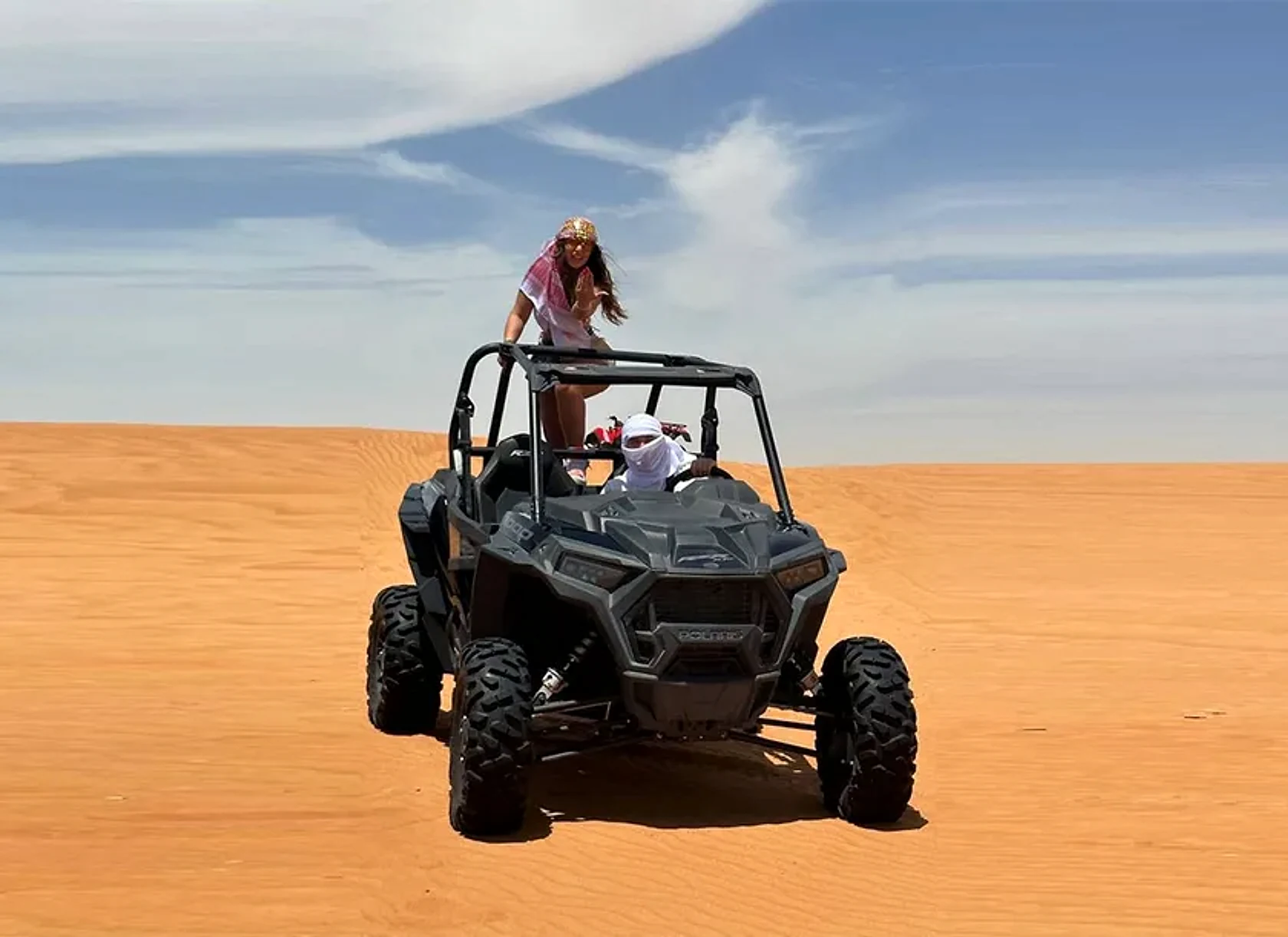
If you are thinking about booking, talk to the operator about your group's size and experience. A group of four or more can often get a private tour for a small premium. Private tours let you set the pace and stop for photos whenever you want. Shared tours are cheaper but follow a set route and schedule. Both options are valid. It just depends on whether you value flexibility or budget.
One last piece of advice: do not try to film the entire ride with your phone. You will miss the physical sensation of the buggy moving under you. Take a few photos at the stops, then put the phone away and drive. The memory of the sand spraying behind you at the top of a ridge will last longer than any video.
Follow Desert Buggy Rental on
 Facebook
 Instagram
 YouTube
 Pinterest